
Dental Bridges.

    Explore fixed options for a missing tooth with clear guidance and care shaped around your needs.
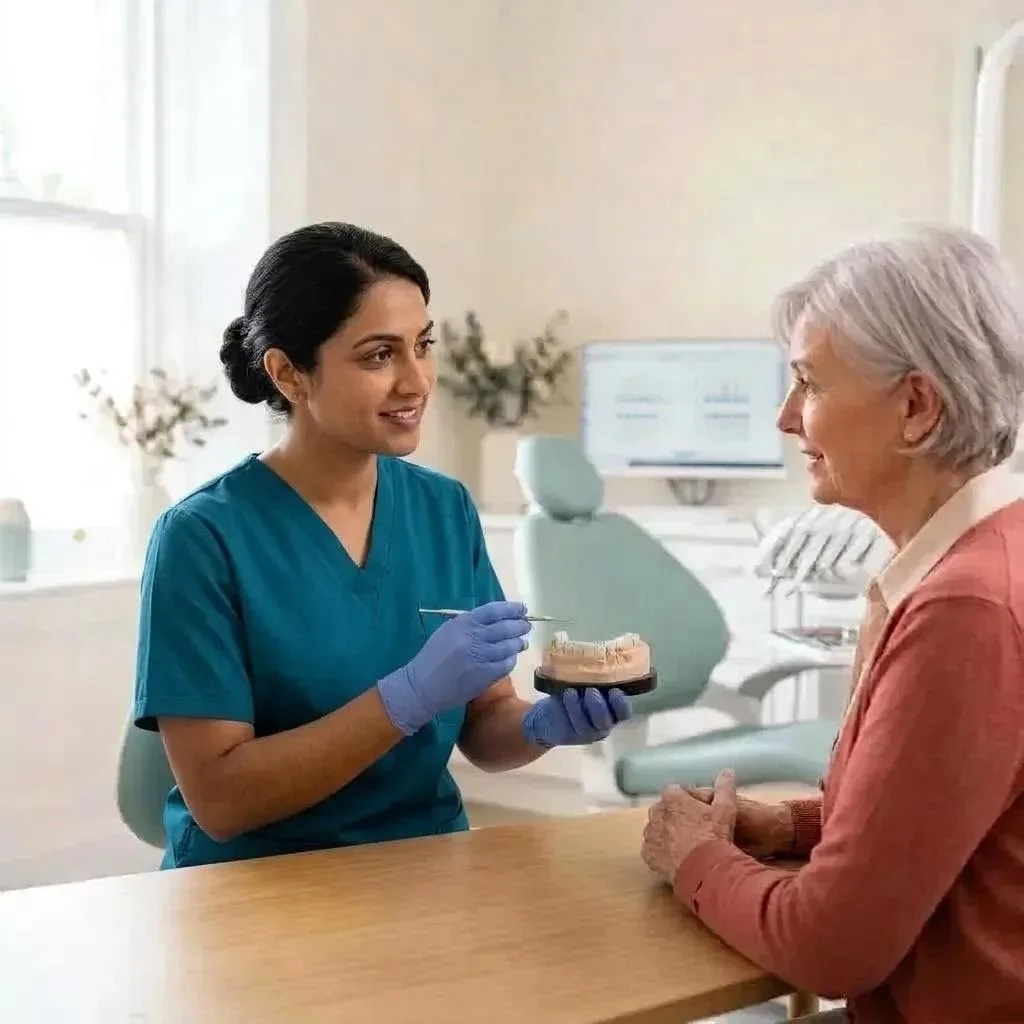
    Illustrative dental bridge consultation using a teeth model in a bright treatment room

    A bridge is a fixed replacement for one or more missing teeth, supported by nearby teeth. Depending on your needs, it may help with chewing, speaking and the appearance of your smile. We’ll assess the gap and supporting teeth, then explain the options without pressure.

    A good place to start

    Compare the options for replacing a missing tooth

    1. 01

      Assess support

      We examine the gap, neighbouring teeth and bite to discuss what may be suitable.

    2. 02

      Plan and prepare

      If a bridge is chosen, supporting teeth may need preparation. Impressions are taken and a temporary may be used while it is made.

    3. 03

      Fit and review

      We fit the bridge, adjust your bite and show you how to clean around and beneath it.

    A little more clarity

    Your questions, answered.

    Clinically reviewed

    A bridge is a fixed replacement for one or more missing teeth, supported by nearby teeth. We assess the gap and supporting teeth before discussing whether a bridge is suitable.

    A bridge stays fixed in place, while a denture can be removed for cleaning. The right choice depends on the gap, the health of your remaining teeth and your preferences.

    Some bridge designs require supporting teeth to be reshaped, which can involve removing enamel. We’ll explain the proposed design, its implications and any suitable alternatives before you proceed.

    Preparation and impressions are followed by a fitting appointment after the bridge is made. A temporary may be used in between. We check the fit, comfort and bite before showing you how to care for it.

    Brush carefully around the supporting teeth and clean beneath the replacement tooth as well as between teeth. We’ll show you suitable tools and techniques for your particular bridge.

    A well-cared-for bridge can last 10–15 years or longer, although its lifespan varies. The health of the supporting teeth and your cleaning routine make the biggest difference.

    Each has advantages, and suitability depends on your situation. A tooth-supported bridge does not require implant surgery, but some designs involve reshaping neighbouring teeth. An implant is placed in the jaw and does not rely on those teeth. Although we don’t currently offer implants at the practice, we’ll discuss which option is best for you and arrange a referral if required.

    Usually two: one to prepare the teeth and take a scan or impression, and one to fit the finished bridge. A temporary bridge may be used in between. Your dentist will explain the appointments needed for your individual treatment.

    We use local anaesthetic during preparation to help keep you comfortable. Some temporary sensitivity to hot and cold afterwards can occur and should settle. Contact the practice if discomfort persists or becomes worse.

    Yes, once it's fitted and you have adjusted to it. Avoid very hard or sticky foods with a temporary bridge, and be sensible with things like ice or hard sweets long term.

    Keep it safe and contact the practice. It can often be recemented if the supporting teeth are healthy. Don't use household glue.

    A gap can let neighbouring teeth tip or drift, change your bite, make cleaning harder and affect your appearance and chewing. A suitable bridge may help restore comfortable chewing and a balanced bite. Your dentist will explain whether replacing the tooth is recommended for you.

    Bridges can be made from porcelain bonded to metal or all-ceramic materials such as zirconia, matched to the colour of your natural teeth. Your dentist will explain which materials are suitable for your teeth and bite.

    If decay or gum disease affects a supporting tooth, the bridge may need to be removed and replaced. Regular check-ups help catch problems early.

    Independent patient information

    Advice from the Oral Health Foundation

    The Oral Health Foundation is an oral health charity. These guides can help you understand your options and prepare questions for your dental team. General information complements, rather than replaces, advice tailored to your mouth.

    • The downsides of dental tourism

      Questions to consider before treatment abroad, including follow-up care, adjustments and what happens if complications arise.

    Links open on the Oral Health Foundation website.

    Start with a conversation.

    We’ll listen, explain what may be suitable for you and give you room to decide.

    Book Now