
Mouth Guards.

    Discuss a sports or night guard designed for its purpose and your individual teeth and bite.
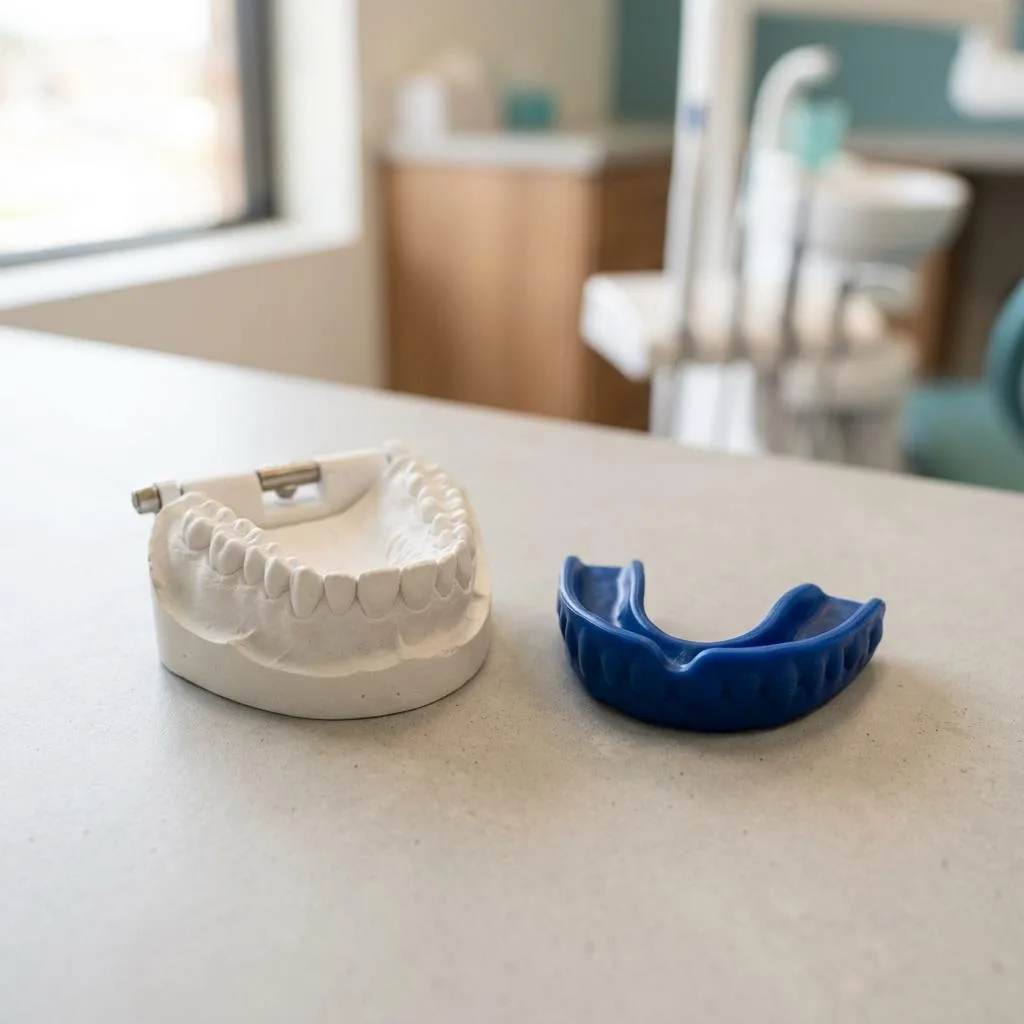
    Illustrative image of a mouth guard beside a teeth model

    A mouth guard can be made to fit your teeth and bite. Sports guards are designed to help reduce the risk of dental injury during contact or impact sports. Night guards are different: they may be used to protect teeth from wear associated with grinding or clenching. We’ll discuss which type, if any, is suitable for you.

    A good place to start

    Choose the right guard for its purpose

    1. 01

      Discuss your needs

      We ask about your sport or concerns about grinding and check your teeth and bite.

    2. 02

      Take impressions

      If a custom guard is suitable, impressions help create a guard shaped to your mouth.

    3. 03

      Fit and review

      We check its fit and explain how to wear, clean and look after it. We can review it if the fit changes.

    A little more clarity

    Your questions, answered.

    Clinically reviewed

    No. A sports guard helps protect against impact, while a night guard is designed for problems such as tooth grinding. We assess the purpose before recommending a suitable design.

    We assess your teeth and bite and take an impression or record for a guard made to fit your mouth. We then check the fit and explain how to wear and care for it.

    A guard can help protect teeth from wear but does not necessarily stop the grinding itself or resolve every cause of jaw discomfort. Your dentist will discuss your symptoms and suitable care.

    Use cool, soapy water after use and follow the care instructions for your particular guard. Check for damage and bring it to reviews so we can assess the fit and condition.

    Yes, where appropriate after an assessment. Growing mouths and changing teeth can affect the fit, so children’s guards need regular checks and may need replacing.

    A custom guard is made from an impression or scan of your teeth for a close fit that helps it stay in place and makes breathing and talking easier. Shop-bought boil-and-bite guards can be bulkier or less secure. Your dentist can advise on a guard suited to your sport and mouth.

    Wear a sports guard for contact or collision sports such as rugby, hockey, boxing and martial arts. It's also worth considering for activities with a risk of falls or flying objects, including cricket, skateboarding and horse riding.

    An adult's guard can last several years with care, although this varies with use and wear. Replace it if it's damaged, worn thin or no longer fits snugly. Bring it to check-ups so we can assess its condition.

    Yes, with a suitable design that protects your teeth and braces while allowing for tooth movement. Ask your dentist or orthodontist about the right fit. Aligners should be removed for contact sports and replaced with an appropriately fitted sports guard.

    Usually, yes. Many custom guards come in a range of colours, including team colours, and some can include a name or number [practice to confirm options].

    Typically around 1–2 weeks after your impression or scan, although timing can vary. Ask the practice about the expected timescale and allow plenty of time before the start of the season.

    Signs can include waking with jaw ache or headaches, worn or chipped teeth, sensitivity, or a partner hearing you grind. Your dentist can check for wear and assess your symptoms; these signs can also have other causes.

    Contact the practice urgently if a tooth is knocked out or broken. If you cannot reach us, seek urgent dental advice through NHS 111. Bring your guard so we can check its condition and whether it needs replacing.

    Start with a conversation.

    We’ll listen, explain what may be suitable for you and give you room to decide.

    Book Now